
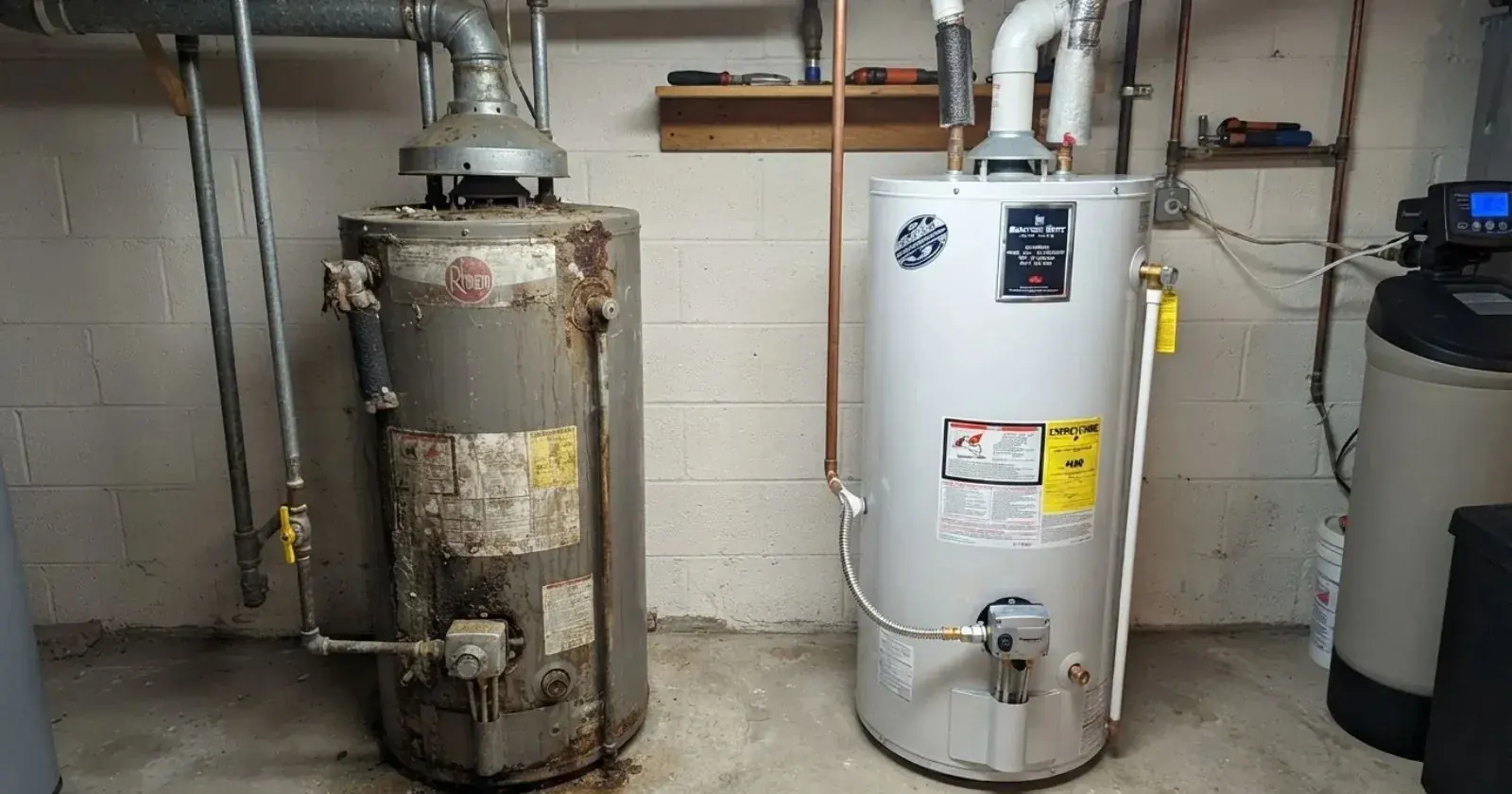
Factors that move the price
Each line below changes the total.
| Factor | Why it matters | What to ask |
|---|---|---|
| Type of heater | Tank, heat pump and tankless units differ widely | Which type fits my home |
| Capacity | Larger tanks cost more | What size my household needs |
| Fuel | Gas and electric need different parts | Will anything change |
| Venting | Gas units need proper vents | Is my vent reusable |
| Code items | Expansion tank, drain pan, relief valve and strapping | Are they included |
| Location | Attics and tight closets take longer | Will access add time |
| Removal | Hauling the old unit away | Is disposal included |
Why we do not post a price list
A fixed number for water heater replacement would have to assume an average house. Your house is not average. A gas tank that slides into the same spot with an existing good vent is a straightforward job. A move from a gas tank to a tankless unit with a new gas line is a much larger one.
We give a clear price before work starts, based on what we see. That is why we ask about your current heater, the location and the fuel when you call. A photo of the label on the old tank helps us come prepared.
Want a price for your house?
Call (385) 488-1892 and describe your water heater. We will explain the price before we start.
What a complete quote includes
Use this checklist to compare quotes side by side.
The unit itself
Brand, size, fuel and warranty terms.
Installation parts
Connectors, shutoff valve, relief valve and discharge pipe, expansion tank if needed.
Code and safety items
Drain pan if needed, seismic or other strapping, venting changes.
Haul away and cleanup
Removal of the old unit and a clean work area.
Local conditions that affect the job
Springville is at about 4,554 feet with a January mean low near 22 degrees Fahrenheit. Water heaters in unheated garages and crawl spaces work harder in winter, and venting and combustion air need care. The city's published information does not say whether a water heater swap needs a permit, so ask the Building Division at 801-489-2704. The city schedules inspections through its City Inspect portal with 24 hours of notice.
The city water report lists total dissolved solids from 240 to 476 ppm and no hardness figure. Scale shortens the life of any water heater, so test your tap and consider a flushing schedule. If scale is a problem, see water softener and filtration.
Repair or replace?
Replacement is not always the first answer. A failed thermostat, a worn element or a bad thermocouple can be repaired. A tank that leaks from the shell cannot. Age matters too, because a heater near the end of its life may fail again soon after a repair.
Our water heater repair page explains what we can fix. When a tank has failed, water heater replacement covers emergency swaps and water heater installation covers planned ones.
Warranty and licensing questions
Ask about the manufacturer warranty on the tank and on parts, and ask who covers labor. Warranty terms differ by brand and model. Ask to see them in writing. Also confirm that the person doing the work is licensed. Utah licenses apprentices, journeymen and master plumbers, and you can look up any license at secure.utah.gov/llv/search/index.html.
Ways to avoid an emergency premium
Replacing an aging heater before it fails gives you time to compare options and schedule the work. Signs it is time include rust in hot water, rumbling noises, moisture at the base and rising age. Emergency swaps can be done fast, but planned ones leave room for better choices.
Tank, heat pump or tankless: how they change the total
A standard gas or electric tank is the baseline. A heat pump unit usually costs more up front and needs a drain and air space. A tankless unit often costs more still, and adds gas line, venting or electrical upgrades. Our tankless service page explains the extra work involved.
Running cost also differs. Lower energy use can offset a higher purchase price over time, but only if the unit fits your home and your habits. Ask the installer to compare the options for your house in terms of purchase price, installation scope and maintenance.
Red flags in a quote
Be careful with a quote that lists only a total with no description. Ask what happens if the job turns out to need more work, and how that is priced. Be wary of pressure to decide instantly, or a price that seems far below others, since it may leave out code items or removal. A good quote is specific and in writing, and it names who is responsible if a hidden problem appears once the old heater is out. Ask how long the work will take and whether hot water will be restored the same day.
Utility and manufacturer programs
Rebates and incentive programs change often and vary by utility and unit type. We cannot promise any in advance. Check with your utility and the manufacturer before buying, and ask the installer whether the model you choose qualifies.
Nearby towns
The same factors apply in Mapleton and Salem, where newer homes may have different venting and space than older homes in the center of town.
Code and permit note
Code items such as relief valves, discharge pipes and expansion tanks come from the International Plumbing Code (IPC), and they are part of a complete quote.
Common questions
They may include different scope: venting, code items, removal or warranty terms. Compare line by line.
Generally yes, but the right size for your household matters more than the lowest price.
Ask. We include hauling the old unit away in the discussion before work starts.
The city FAQ does not say. Call the Building Division at 801-489-2704.
We can give guidance. We explain the price before work starts after learning about your heater and location.