
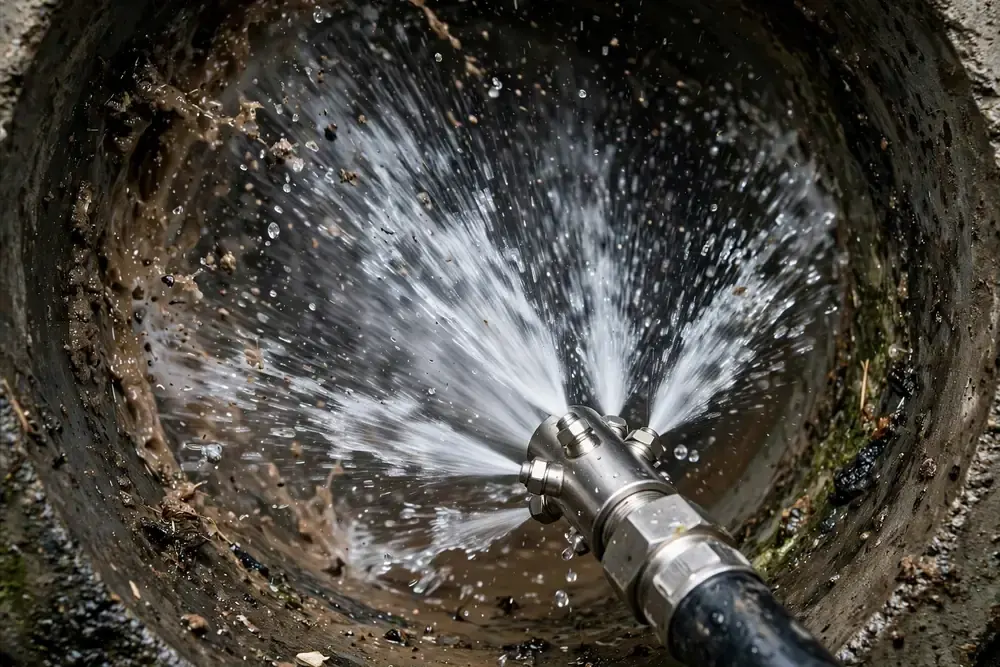
What hydro jetting does that a cable does not
A jetter pumps high pressure water through a hose and a nozzle that fires jets forward and backward. The spray cuts grease, scale and soft roots from the pipe wall, and it flushes the debris downstream instead of leaving it in place. A cable, by contrast, opens a channel through the clog and leaves buildup on the sides.
The result is a cleaner pipe with more of its original diameter, which is why lines that keep clogging often stay clear for much longer after jetting. It is not a fix for a broken pipe, though, and that is why we run a camera first. See our drain cleaning page for lighter work.
When a backed up line is an emergency
A line that is full of grease, scale or roots can give out without warning. These situations should be treated as urgent.
Backup at the lowest drain
Gray water rising in a tub, floor drain or basement shower means the main line is blocked or heavily restricted.
Restaurant and kitchen lines
A kitchen drain that stops mid service costs money by the hour. Tell us it is commercial and we will plan the access.
Gurgling and slow flow everywhere
When all fixtures slow at once, jetting the main is often more effective than another round of cabling.
Repeat backups
A line that clogs every few months holds buildup the cable cannot remove.
How a jetting visit works
We treat jetting as a sequence, not a single step, because the camera findings decide the pass.
Find the access point
We locate a cleanout or install a temporary access point so the hose can enter the line.
Look first
A camera shows the buildup and any damage. Jetting a cracked or collapsed pipe can make things worse, so we confirm the pipe is sound.
Jet the line
We work the nozzle forward and back through the pipe, using nozzle types matched to grease, scale or roots.
Look again
A second camera pass confirms the pipe is clean and documents any defects for your records.
Cable machine or hydro jetter
Neither tool is better in every case. The choice follows the clog and the pipe.
Cabling works best for
- A fresh clog from paper or a small object
- A single fixture or short branch line
- Quick emergency relief
- Cases where access is limited
Jetting works best for
- Grease and scale built up over time
- Main sewer and long branch lines
- Roots in otherwise sound pipe
- Lines that return to slow flow soon after cabling
Line clogging again and again?
Call the 24/7 line. We will recommend the right tool after hearing how often it happens.
Why jetting needs a camera and a cleanout
Water pressure is only useful when the pipe can take it. Old clay, brittle cast iron or a broken joint can be damaged by a jetter, and a camera confirms the line is sound first. Springville's own basement permit guide notes that cleanouts need 18 inches of clearance after drywall, a requirement that applies directly to jetting access.
If the camera shows damage, we move to sewer line repair instead of jetting. If it shows only buildup, jetting is a good choice, and our sewer line cleaning page lists how we plan a full main line cleaning.
What affects the price of hydro jetting
A clear price comes before the work, and these factors set it.
Call (385) 488-1892 for a price on your line.
Code and permit note
Code note: jetting does not change the pipe, but any repair it uncovers is done to the International Plumbing Code (IPC) as Utah amends it.
Common questions
Yes. The 24/7 line takes backups at all hours. We can often open the line the same day, and we advise whether jetting is the right choice after hearing the symptoms.
On sound pipe, no. On cracked, collapsed or very old pipe it can. That is why we run a camera before jetting and stop if the pipe is not in good shape.
It depends on volume and grease control. Kitchens with a heavy fryer load often schedule jetting several times a year, and a plan should follow what the camera shows.
It clears roots from the pipe wall and breaks up small ones. Roots will grow back if the entry point is not repaired, so we discuss lining or repair if the camera shows a defect.
Yes. We dispatch from Springville to Provo and Spanish Fork, and the same process applies.